BLOG
BLOG
TEKST
Tekst
Tekst
A workout split is how you divide up your workouts throughout the week either by body region, movement, specific body part, or by lift. This divide-and-conquer approach to exercise allows bodybuilders and general gym-goers to focus their efforts in a way that optimizes results.
How do you organize workouts? It's a question everyone must answer.
Pick the wrong split and it'll be harder to get optimal results, regardless of the training methods and loading schemes. The wrong split can lead to inadequate recovery time, less growth, and crappy performance. It can insufficiently stimulate some muscles and be overkill for others.
Let's discuss how to design the perfect training split and the four best options.
Spiergroei, ook wel hypertrofie genoemd, is een toename van de spiermassa die mede mogelijk wordt gemaakt door (kracht)training.
Split? Full Body of Split workout?
Voor welk soort schema jij het best kunt kiezen hangt af van hetdoel dat je voor ogen hebt, maar ook van andere praktische zaken. heb je bijv weinig tijd om te trainen of start je net met trainen? dan is een fullbody waarschijnlijk een meer efficientekeuze.
De belangrijkste voorwaarde voor spiergroei is mechanische spanning. naast de soort training en de freqentie gaat het natuurlijk ook om de kwaliteit van de training en andere factoren zoals je voeding, herstel etc.
MECHANISCHE SPANNING IS DE BELANGRIJKSTE VOORWAARDE VOOR SPIEROPBOUW
Zodra jij krachttraining gaat doen met (zware) gewichten moeten de spiervezels kracht leveren om de beweging uit te kunnen voeren. Dit is een vorm van mechanische spanning die leidt tot een biologische reactie, namelijk spiergroei.
DE BESTE SPLIT IS ....
Tekst
Traditioneel gezien zijn de meeste trainingsschema's tegenwoordig helaas nog steeds veelal gebaseerd op de ervaringen van de ouderwetse bodybuilders. Dit heeft geleid tot veel niet wetenschappelijk onderbouwde programma's: de Bro split. Het is niet persé altijd compleet verkeerd en slecht, maar het is zeker niet de meest efficiënte en effectieve manier van trainen. Én niemand heeft als doelstelling het verspillen van tijd & geld, dus is het de hoogste tijd voor verandering!
^
Volg jij ook nog steeds een soort van traditioneel-spier-per-spier-body-builders-routine waarbij je het lichaam verdeelt in spiergroepen en per training één of twee van deze spiergroepen traint? Meestal zijn op maandag de borstspieren en triceps aan de beurt ... Zo ja, dan is het de hoogste tijd voor verandering!
TEKST
Tekst
What's the best training split?
Recente studies en mijn 20+ jaar ervaring in de fitness wereld geven aan dat het trainen van een spiergroep twee keer per week effectiever is dan 1x per week. Daardoor is de optimale en beste split 4x per week maar d ...
Dit zijn mijn drie favoriete splits:
1. Full Body workout + Fun Day (The Gap Split)
This is the training split I use the most with athletes and strength-focused clients. It's a classic full-body split with the addition of a bonus workout. Back in the day, the typical approach was to train the whole body three days a week: Monday, Wednesday, and Friday. This was optimal for those who simply want to get bigger, stronger, more powerful, and better conditioned.
.
While there are several ways of doing whole-body training, I use a minimalist approach of relying almost exclusively on big movements. I use 4-5 exercises per workout:
.
• A squat
• A press
• A pull
• A hinge
.
I’ll sometimes add a unilateral lower-body exercise or a loaded carry. Using these exercises will hit everything to some extent. Sure, you don’t have any biceps, triceps, or delt exercises, but these muscles are involved in the big basic exercises.
The benefits of whole-body training are:
1. HITTING EACH MUSCLE AND KEY MOVEMENT PATTERN THREE TIMES A WEEK, WHILE YIELDING BETTER OVERALL STRENGTH GAINS, MAY ALSO PROVIDE A MUSCLE GROWTH ADVANTAGE.
2. IT ALLOWS YOU TO USE SEVERAL DIFFERENT TRAINING METHODS, INTENSITY ZONES, AND CONTRACTION TYPES FOR EACH MUSCLE.
For example, I like to use an eccentric-focus (slow eccentrics/negatives or eccentric overloads) on Monday, and stato-dynamic (including isometric holds during a set or the reps) on Wednesday, then do normal lifting on Friday.
But you can also use something like a heavy/light/moderate or a heavy/high-density/volume to reap gains from various angles. I find it more effective to include one form of training per session rather than trying to include several packed into one workout.
3. IT'S VERY EFFICIENT.
4. WHOLE-BODY TRAINING HAS BEEN FOUND TO LOWER MYOSTATIN MORE THAN UPPER AND LOWER-BODY TRAINING.
Myostatin is a protein released by the muscles that limits growth. The less you produce, the more growth you get.
If you're a bodybuilder who wants to exaggerate the development of several body parts, this might not be the split for you. To overcome this limitation, I added a fourth weekly workout – the gap workout. The gap workout will fill your need for more isolated pump work.
It's a less stressful workout where you do exclusively "easier" exercises: isolation, machine, or pulley work. The exercises you do in your gap workout are selected to fill out the development gaps left by the whole-body sessions.
Typically, you'd do exercises that hit the biceps, triceps, hamstrings, and rear delts. But you can use this workout to work on any muscle that needs a boost. This allows you to reap the benefits of whole-body training while still getting more typical bodybuilding results.
.
THE GAP WORKOUT: If you’re a bodybuilder who wants to exaggerate the development of several body parts, a traditional full-body plan might not be for you. To overcome this limitation, I added a 4th workout – the gap workout. This bonus workout will fill your need for more isolated pump work. It’s a less stressful workout where you do exclusively “easier” exercises: isolation, machine, or pulley work. The exercises you do in your gap workout are selected to fill out the development gaps left by the whole-body sessions.
.
Typically, you’d do exercises that hit the biceps, triceps, hamstrings, and rear delts. This allows you to reap the benefits of whole-body training while still getting more typical bodybuilding results.
maandag, woensdag en vrijdag full body en zaterdag kun je trainen wat jij leuk vind, bijvoorbeeld biceps en triceps of conditioning
2. Push/Pull (Modified Hatfield Split)
I first learned of this split when I was 18 and did Fred Hatfield's 80-day powerlifting cycle. In that program – specifically designed to peak for a powerlifting competition – you'd train squat, bench, and assistance on one workout, and deadlift and assistance on the other. So, four total workouts per week.
It's a split I do often and use with clients. It's highly motivating and a good way for those who don't love training legs to find it more palatable. While you have two lower-body exercises per workout, you also have four upper-body movements.
It's also the split I use in the Best Workout Plan for Natural Lifters but with a higher frequency and lower volume.
Here's how it looks:
Maandag en Donderdag push en quads
Dinsdag en Vrijdag pull en posterior chain
3. Upper/Lower Split
Here's what the weekly split would look like:
• Maandag: Lower Body (heavy)
• Dinsdag: Rust
• Woensdag: Upper Body (Light)
• Donderdag: Rust
• Vrijdag: Lower Body (Light)
• Zaterdag:Upper Body (Heavy)
• Zondag: Rust

2. UPPER/LOWER SPLIT
This split allows you to hit everything hard twice per week. There's minimal negative carryover from each workout. It allows you to include more volume and target work for individual muscles than the whole-body split. There are fewer big compound lifts compared to a whole-body workout, which makes it more manageable for many.
The only drawback is that an upper/lower split can be psychologically demotivating for some. Lots of guys don't like to train legs. Having half the workouts solely devoted to legs can kill motivation for those who hate lower-body sessions. Something can be physiologically optimal, but if it kills your will to train hard, it won't work.
But if you like training the lower body, this is one of the best spits (if not the best) you can use. It's the most versatile. It can be used for every training goal: strength, size, athletic performance, fat loss, or health. And there are several ways to do it.
You can use the typical approach where you hit the whole upper body twice per week and the whole lower body twice. This is the best option for muscle growth.
You can use a lift-specific division. For example, using the Wendler 5/3/1 split you'd have a squat day, a bench day, a deadlift day, and a military press day. You train the big lift and then add 3-5 assistance exercises for the muscles involved in that day's lift. This is a good way to train for strength since you can easily fix the weak links in your big lifts.
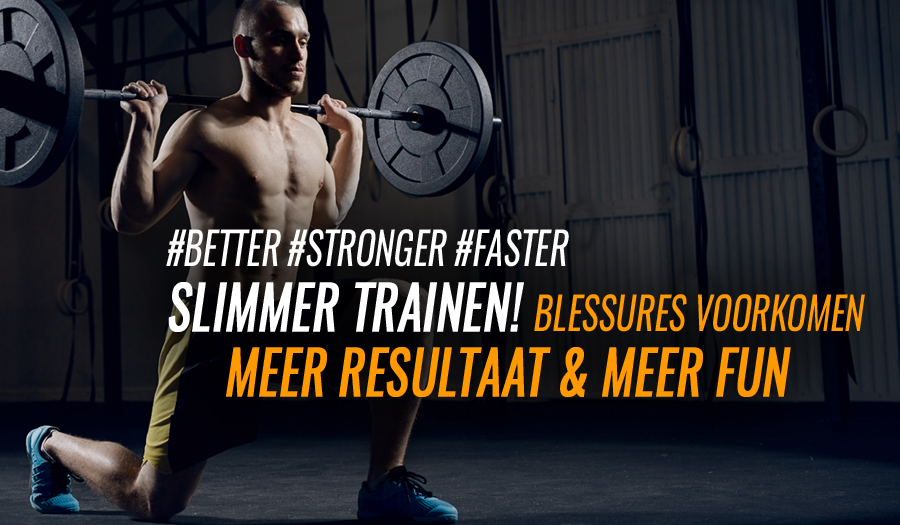
There's also the option of using a movement plane or pattern split. You could do an upper-body workout with vertical pulling and pressing, and a second workout with horizontal pulling and pressing. For the lower body, you'd go anterior chain one day and posterior chain the other day. This is great for balanced development and to minimize injuries.
Here's what the weekly split could look like:
Monday: Lower Body One
Tuesday: Off
Wednesday: Upper Body One
Thursday: Off
Friday: Lower Body Two
Saturday: Upper Body Two
Sunday: Off
MODIFIED PUSH/PULL/LEGS
The original push/pull/legs split is extremely popular. It's effective, but it doesn't quite check all the boxes.
While you have minimal negative carryover from workout to workout, it's hard to hit every muscle twice every 7-8 days unless you do up to 5-6 workouts per week, which will be too much for most.
The way to make push/pull/legs into an optimal split is to add a fourth workout: a whole-body day.
The split would become:
Monday: Whole Body
Tuesday: Off
Wednesday: Legs
Thursday: Off
Friday: Push
Saturday: Pull
Sunday: Off
You can use the whole-body workout to work on strength and the other days to focus more on maximizing growth or addressing weak links in the big lifts.
For example, on Monday you'd do a squat pattern, a press pattern, a pull/row, and a deadlift. Nothing else. Then on Wednesday, Friday, and Saturday you'd train muscles to maximize growth, with an emphasis on the lagging muscles in the big lifts:
Wednesday: Assistance exercises to build the squat
Friday: Assistance exercises to build the bench press
Saturday: Assistance exercise to build the deadlift and row (or chin-up)
This is a motivating split. Each workout has a very specific purpose and you have two different "feels" during the week.
You can also use the whole-body day for something different than strength, like conditioning work or athletic training.
CATEGORY
SEARCH
Een persoonlijke benadering van de trainingen is zeer belangrijk. Géén enkele oefening is verplicht als het gaat om het behalen van resultaat in de sportschool. Het programma moet bestaan uit oefeningen die geschikt zijn voor jou en niet voor iemand anders.
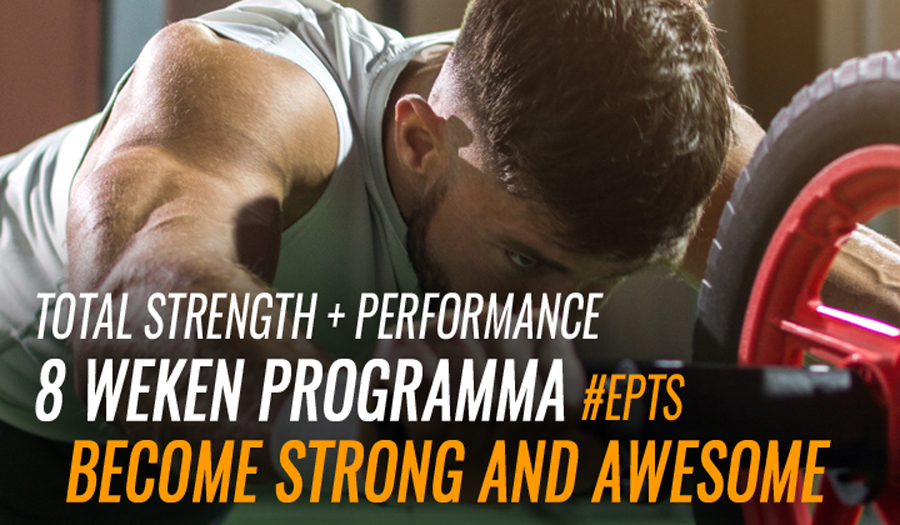
Dit programma zorgt voor kracht, een hoge fatburn én er is de opbouw en ontwikkeling van spiermassa. Géén ouderwetse bodybuilding-achtige praktijken maar een snel, sterk en explosief lichaam. Een up-to-date movement based programma voor een optimaal resultaat. Sterker worden, spiermassa opbouwen, een ijzersterke conditie ontwikkelen en meer power verkrijgen! Er is géén aandacht voor de traditionele slaapverwekkende cardio activiteiten want de meest gespierde, strakke en sterke lichamen in deze wereld zijn opgebouwd door trainingen vanuit een slimme strategie en een intelligent trainingssysteem.
LOOK GOOD.
BE STRONG.
BE FAST.
BE FLEXIBLE.
Is het jouw doelstelling om sterker te worden, spiermassa te ontwikkelen, atletisch vermogen te ontwikkelen, de conditie op te bouwen tot een compleet en hoog niveau van fitheid dan is dit programma absoluut geschikt voor jou. START now and Become Strong & Awesome!